Guest Post by The Next Gen Technologies
Nothing frustrates customers more than waiting. Whether it is a bank branch, a government service center, a hospital, or a retail store, long queues and unpredictable wait times damage customer satisfaction, drive away business, and create stressful environments for both customers and staff. In today’s competitive landscape, businesses cannot afford to lose customers to poor queue management.
This is where a professional Queue Management System transforms operations. By replacing chaotic, unstructured lines with organized, efficient, and data-driven customer flows, businesses can serve more customers, reduce perceived wait times, and gather valuable insights for continuous improvement.
A modern queue management system does far more than dispense tickets. It integrates digital signage, mobile notifications, SMS alerts, real-time analytics, and staff performance tracking into a seamless ecosystem that elevates the entire customer journey.
The Next Gen Technologies (visit thenextgentechnologies.com) is a top company specializing in state-of-the-art queue management solutions. With years of expertise serving clients across Pakistan and the Middle East, The Next Gen Technologies helps businesses eliminate waiting frustration, optimize staff utilization, and deliver exceptional customer experiences.
In this comprehensive guide, we will explore the fundamentals of queue management systems, the specific landscape of Queue Management System in Riyadh and Queue Management System in Saudi Arabia, and why The Next Gen Technologies is the partner you can trust.
What Is a Queue Management System?
A Queue Management System (QMS) is an integrated technology solution designed to organize, monitor, and optimize customer flow in service environments. It replaces physical lines with virtual queuing, digital ticketing, and real-time status updates.
Core Components of a Modern Queue Management System
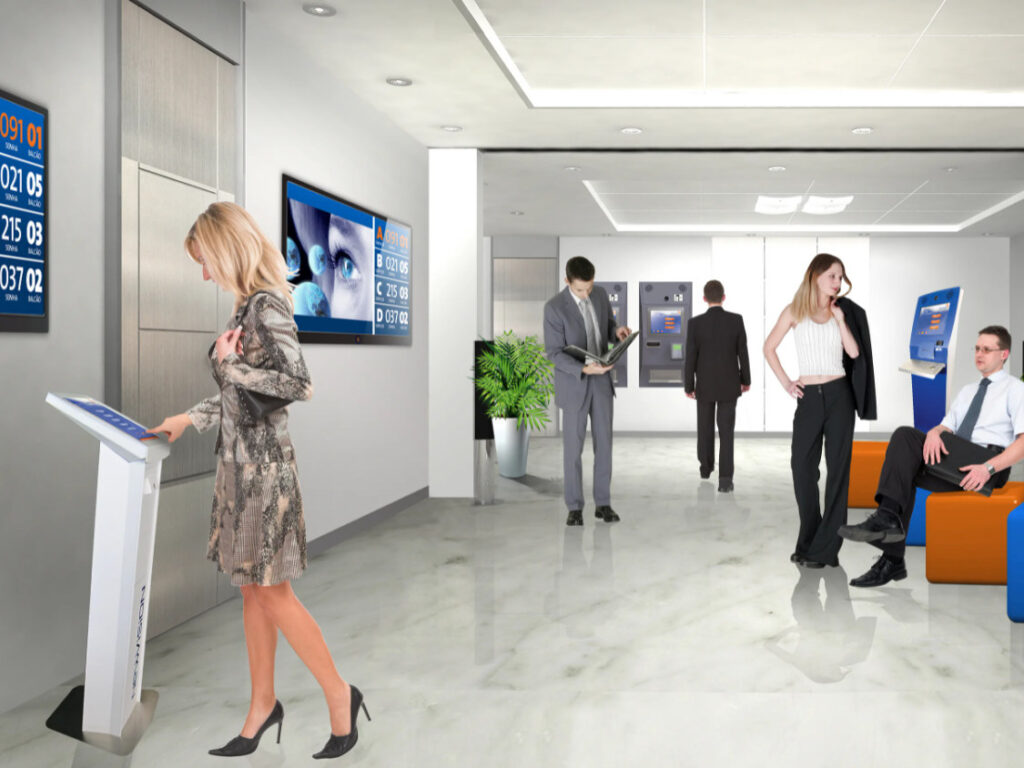
Ticket Dispensing Kiosks: Self-service terminals where customers select their service type and receive a numbered or digital ticket. These kiosks can be touchscreen-based and support multiple languages.
Digital Signage Displays: Screens strategically placed throughout the waiting area that show which counter is serving which ticket number. This reduces confusion, prevents customers from wandering, and creates a calm waiting environment.
Audio Announcements: Professional, clear voice announcements calling the next customer to a specific counter. Volume can be adjusted for different zones.
Mobile Queue Management: Customers can join the queue remotely via smartphone and receive real-time updates on their position and estimated wait time. They can wait in their cars or at nearby cafes rather than crowding the lobby.
SMS Notifications: Automated text messages alerting customers when their turn is approaching, allowing them to return to the service point at the right moment.
Staff Dashboard: A real-time view for managers showing queue lengths, average wait times, service times per staff member, staff idle time, and peak hour patterns.
Analytics and Reporting: Historical data to optimize staffing levels, identify bottlenecks, predict busy periods, and improve service efficiency over time.
Virtual Queuing: Customers can leave the premises entirely and receive a notification when it is their turn. This is particularly valuable in shopping malls, medical clinics, and busy retail environments.
Centralized Management: For multi-branch operations, a cloud-based dashboard allows headquarters to monitor queue performance across all locations in real time.
How a Queue Management System Works
- A customer arrives and takes a ticket from a kiosk or via their mobile phone
- The system assigns the customer to a specific service queue based on their need
- The customer is displayed on digital screens and receives estimated wait time
- When a service counter becomes free, the system calls the next ticket
- The staff member serves the customer, and the system records service duration
- The customer can optionally rate their experience
- Managers access real-time and historical data to optimize operations
Benefits of Implementing a Queue Management System
For Customers:
- Reduced perceived wait time through digital displays and estimated wait times
- Freedom to wait comfortably via mobile and SMS notifications
- Fairness and transparency with no queue jumping
- Reduced stress from organized environments
For Staff:
- Focused service without interruptions from waiting customers
- Performance feedback through data on service times
- Reduced conflict as ticketing eliminates disputes
- Better work environment with calmer waiting areas
For Management:
- Data-driven decisions on peak hours, wait times, and staff performance
- Optimized staffing schedules
- Improved customer satisfaction scores
- Increased throughput without adding counters
The Next Gen Technologies delivers comprehensive queue management solutions that integrate all these components into a seamless, user-friendly platform. Their systems are reliable, scalable, and customizable for any industry—from banks and hospitals to government offices and telecom centers.
Queue Management System in Riyadh: Meeting the Capital’s Demands
Riyadh, the administrative and financial heart of Saudi Arabia, is a city in rapid transformation. Under Vision 2030, government entities, banks, healthcare providers, and retail giants are under immense pressure to digitize operations and deliver world-class customer experiences. A robust Queue Management System in Riyadh is no longer a luxury—it is a necessity.
The Riyadh Challenge
High Customer Volumes: Riyadh is home to millions of residents plus daily commuters from surrounding areas. Government service centers, banks, and hospitals often see hundreds or thousands of customers daily. Without a QMS, chaos ensues.
Customer Expectations Are Rising: Riyadh residents have experienced world-class digital services. They expect efficiency, transparency, and minimal waiting. Long, disorganized queues drive them to competitors.
Government Mandates: Saudi government entities are required to implement customer service standards, including maximum wait times. A queue management system provides the data to prove compliance.
Staff Productivity: Without a QMS, staff waste time shouting for customers, dealing with line-jumping disputes, and managing frustrated customers. A QMS allows them to focus on serving customers efficiently.
Digital Transformation Push: The Kingdom’s Vision 2030 places a strong emphasis on technological innovation in public service delivery. Queue management systems are a core component of this modernization effort.
Key Sectors Benefiting from Queue Management in Riyadh
Government Service Centers: Ministries, civil affairs departments, passport offices, and traffic departments handle massive daily footfall. QMS brings order and transparency to these essential services.
Banking and Finance: Riyadh’s financial district houses major banks and financial institutions. Multiple branches across the city need consistent queue management for tellers, loan officers, and customer service desks.
Healthcare: Major hospitals and clinics in Riyadh require patient queue management for registration, pharmacy, labs, and specialist consultations. QMS reduces waiting room congestion and improves patient experience.
Telecommunications: Customer service centers for major telecom providers need efficient walk-in management for bill payments, new connections, and technical support.
Key Features of The Next Gen Technologies’ Riyadh Deployments
Bilingual Interface: Seamless Arabic and English switching for ticket kiosks and displays.
National ID Integration: For government services, the system can read national ID cards for faster check-in.
SMS Gateway: Direct integration with Saudi telecom providers for reliable SMS notifications.
Remote Management: Centralized control for multi-branch operations across Riyadh.
Heat Map Analytics: Identify peak hours and seasonal trends specific to Riyadh’s business calendar.
Extreme Climate Durability: Hardware designed to withstand Saudi Arabia’s high temperatures in outdoor or semi-outdoor installations.
The Next Gen Technologies has deployed Queue Management System in Riyadh solutions for dozens of clients across the capital. Their systems integrate with local requirements, including Arabic-first interfaces, compatibility with national ID systems, and real-time reporting for management.
Queue Management System in Saudi Arabia: Transforming Customer Experience Nationwide
Beyond Riyadh, the demand for a reliable Queue Management System in Saudi Arabia is growing rapidly across every region—from Jeddah’s commercial hubs to Dammam’s industrial centers to the emerging tourism destinations along the Red Sea.
Why Queue Management Is Critical Across the Kingdom
Vision 2030 Digital Transformation: The Saudi government is aggressively digitizing public services. Queue management is a core component of this transformation, ensuring that physical service centers operate as efficiently as digital channels.
Growing Private Sector Competition: Banks, telecom companies, healthcare providers, and retailers are competing fiercely for customers. A smooth, fast queue experience is a competitive advantage.
Diverse Customer Needs: Saudi Arabia serves a diverse population including citizens, residents, and pilgrims (especially in Makkah and Madinah). A QMS must handle multiple languages, service types, and special needs.
Data-Driven Decision Making: A QMS provides actionable data on customer flow, allowing businesses to optimize staffing, reduce costs, and improve service levels.
Post-Pandemic Expectations: The COVID-19 pandemic heightened awareness of crowded spaces. Queue management systems help maintain social distancing and reduce physical contact points.
Regional Considerations Across Saudi Arabia
Jeddah: As the commercial gateway and tourism hub, Jeddah’s businesses need QMS solutions for high-volume retail, port-related services, and hospitality. The city’s hard water and humidity require durable hardware.
Dammam: The industrial center of the Eastern Province has demand for QMS in manufacturing facilities, logistics centers, and healthcare institutions serving the industrial workforce.
Makkah and Madinah: During Hajj and Umrah seasons, service centers in the holy cities face extreme customer volumes. QMS solutions must handle massive spikes in demand with high reliability.
NEOM and Giga-Projects: Emerging smart cities and mega-developments are incorporating advanced queue management as part of their core infrastructure.
Industries Adopting Queue Management Across Saudi Arabia
- Banking: Major Saudi banks use QMS in their branches nationwide for teller queues and customer service counters
- Telecommunications: Customer service centers for STC, Mobily, Zain, and other providers
- Healthcare: Hospitals, clinics, and diagnostic centers across all regions
- Government: Passport offices, civil affairs, traffic departments, and municipal services
- Retail: Large department stores, electronics chains, and hypermarkets
- Hospitality: Hotel check-in, concierge services, and event registration
The Next Gen Technologies’ National Presence
The Next Gen Technologies has established itself as a top provider of Queue Management System in Saudi Arabia solutions by understanding the unique needs of the Kingdom. Their systems are designed for Saudi Arabia’s climate, culture, and regulatory environment.
Why The Next Gen Technologies is the top choice for Saudi businesses:
- Proven Deployments: Successful installations across Riyadh, Jeddah, Dammam, Makkah, Madinah, and beyond
- Local Support: 24/7 technical support based in Saudi Arabia, understanding local business hours and holidays
- Customizable Solutions: Every business is unique. The Next Gen Technologies tailors the QMS to your specific service types, branding, and workflow
- Scalable Architecture: Start with a single branch and expand to hundreds. The system grows with you
- Affordable Pricing: World-class technology at competitive prices, with flexible payment options
- Integration Ready: Seamlessly connects with your existing CRM, appointment systems, or customer database
- Multilingual Support: Full support for Arabic, English, and other languages as needed
Why The Next Gen Technologies Is the Top Choice for Queue Management
With numerous vendors offering queue management software, The Next Gen Technologies stands apart as the top company for several compelling reasons:
Proven Expertise Across Industries
The Next Gen Technologies has successfully deployed queue management solutions across banking, healthcare, government, retail, and telecom sectors. Their portfolio demonstrates deep understanding of different operational requirements.
Comprehensive Solutions
The company offers end-to-end queue management, including:
- Ticket dispensing kiosks (touchscreen and button-based)
- Digital signage displays and audio systems
- SMS and mobile notification gateways
- Staff performance dashboards
- Centralized reporting for multi-branch operations
- Integration with existing CRM and appointment systems
Local Presence with Regional Expertise
The Next Gen Technologies serves clients across Saudi Arabia and understands local challenges—from extreme climate conditions to multilingual requirements to integration with national ID systems.
Customized Approach
Every business has unique workflows. The Next Gen Technologies designs solutions tailored to your specific service types, counter configurations, and customer demographics.
Affordable and Scalable
The Next Gen Technologies offers competitive pricing and flexible solutions that grow with your business. Start with a single location and expand to hundreds—the system scales seamlessly.
Commitment to Innovation
The Next Gen Technologies continuously invests in research and development, bringing mobile queuing, AI-based wait time predictions, and real-time analytics to Saudi businesses.
Exceptional Support
A dedicated support team ensures your queue management system operates at peak performance. Remote and on-site support options are available for critical operations.
Steps to Implement a Queue Management System
Implementing a professional Queue Management System requires careful planning:
Step 1: Needs Assessment
Evaluate your service types, expected customer volume, number of counters, and integration requirements. Determine whether on-premise or cloud-based deployment is appropriate.
Step 2: Site Evaluation
Assess the physical layout of your waiting area, counter locations, and sightlines for digital signage. Plan for kiosk placement and cable routing.
Step 3: Technology Selection
Choose hardware (ticket kiosks, digital displays, audio systems) and software (queuing engine, analytics dashboard) that meet your needs. Ensure compatibility with existing systems.
Step 4: Installation and Configuration
Professional installation ensures proper setup and minimal disruption. Configure service types, counter assignments, notification templates, and reporting parameters.
Step 5: Staff Training
Train staff on counter-side operations, dashboard use, and handling exceptions (no-shows, special needs customers, VIPs).
Step 6: Customer Communication
Inform customers about the new system through signage and staff explanation. Most customers adapt quickly to organized queuing.
Step 7: Monitoring and Optimization
Use analytics data to continuously improve. Adjust staffing, service types, and notification settings based on data insights.
Conclusion
In a world where customer patience is limited and competition is fierce, investing in a professional Queue Management System is essential for any business that serves walk-in customers. The right system reduces wait times, improves staff efficiency, provides valuable operational data, and creates a calm, organized environment that customers appreciate.
For businesses in Riyadh and across Saudi Arabia, the stakes are especially high. High customer volumes, rising expectations, government mandates, and Vision 2030’s digital transformation demands require nothing less than world-class queue management.
The Next Gen Technologies has earned its reputation as a top company for Queue Management System, Queue Management System in Riyadh, and Queue Management System in Saudi Arabia solutions. Their cutting-edge technology, local expertise, and commitment to customer success make them the trusted partner for leading organizations across the Kingdom.
Do not let long queues drive away your customers. Take control of your customer flow today.
Visit thenextgentechnologies.com now to schedule a free consultation and demo. See how The Next Gen Technologies can transform your customer experience.
Frequently Asked Questions (FAQs)
Q1: How much does a queue management system cost in Saudi Arabia?
A: The cost of a queue management system varies based on several factors: the number of service counters, number of locations (branches), required hardware (ticket kiosks, digital displays, audio systems), software features (mobile queuing, SMS gateway, advanced analytics), and deployment type (on-premise or cloud). The Next Gen Technologies provides customized, no-obligation quotes after understanding your specific requirements. They offer flexible pricing options suitable for businesses of all sizes—from single-location clinics to multi-branch banks.
Q2: Can a queue management system integrate with Saudi national ID systems?
A: Yes. The Next Gen Technologies’ queue management solutions can integrate with Saudi national ID systems for government service centers and other public-facing organizations. Customers can check in by scanning their national ID cards, which pre-fills their information and speeds up service. This integration is particularly valuable for NADRA-equivalent services, passport offices, and civil affairs departments. The technical team ensures compatibility with local identification standards.
Q3: How long does installation take, and will it disrupt our daily operations?
A: Installation for a standard single-branch queue management system typically takes 1 to 3 business days. The Next Gen Technologies works during off-hours or overnight to minimize disruption to your daily operations. For multi-branch deployments, the team phases the installation to ensure continuous service. Staff training takes only a few hours, and the system is intuitive enough that customers understand ticket-based queuing immediately. Some businesses choose to run the new system alongside manual queues for the first day to ensure a smooth transition.
Q4: Is the queue management system available in both Arabic and English?
A: Yes, absolutely. The Next Gen Technologies’ queue management systems are fully bilingual, with seamless switching between Arabic and English for ticket kiosk interfaces, digital displays, audio announcements, and SMS notifications. The system automatically detects customer preference if integrated with ID or loyalty data, or allows customers to choose their language at the kiosk. For government institutions and public-facing organizations, this is a critical requirement.
Q5: Do you provide ongoing support and maintenance in Saudi Arabia?
A: Yes. The Next Gen Technologies offers comprehensive maintenance plans and 24/7 technical support from their Saudi Arabia-based team. Regular preventive maintenance visits ensure your system operates at peak performance. If an issue arises, their support team is available by phone, email, or on-site visit—typically resolving problems within hours, not days. This local support is especially valuable for government entities and banks where queue management is mission-critical. Support coverage includes hardware replacement, software updates, and staff refresher training as needed.