Queue Management System in Saudi Arabia: The 2026 Guide to Shorter Waits
A modern queue management system in Saudi Arabia has become one of the fastest ways for retailers, clinics, banks, and government service centers to cut wait times and lift customer satisfaction. As the Kingdom pushes toward world-class service standards under Vision 2030, the humble waiting line has turned into a measurable, manageable part of the customer journey. This guide explains how these systems work, what they cost in real terms, and how to choose the right one in 2026.
If you have ever abandoned a counter because the line looked endless, you already understand the business case. Long queues leak revenue, damage reviews, and burn out frontline staff. The good news: the technology to fix this is now affordable, data-driven, and surprisingly quick to deploy.
What a Queue Management System Actually Does
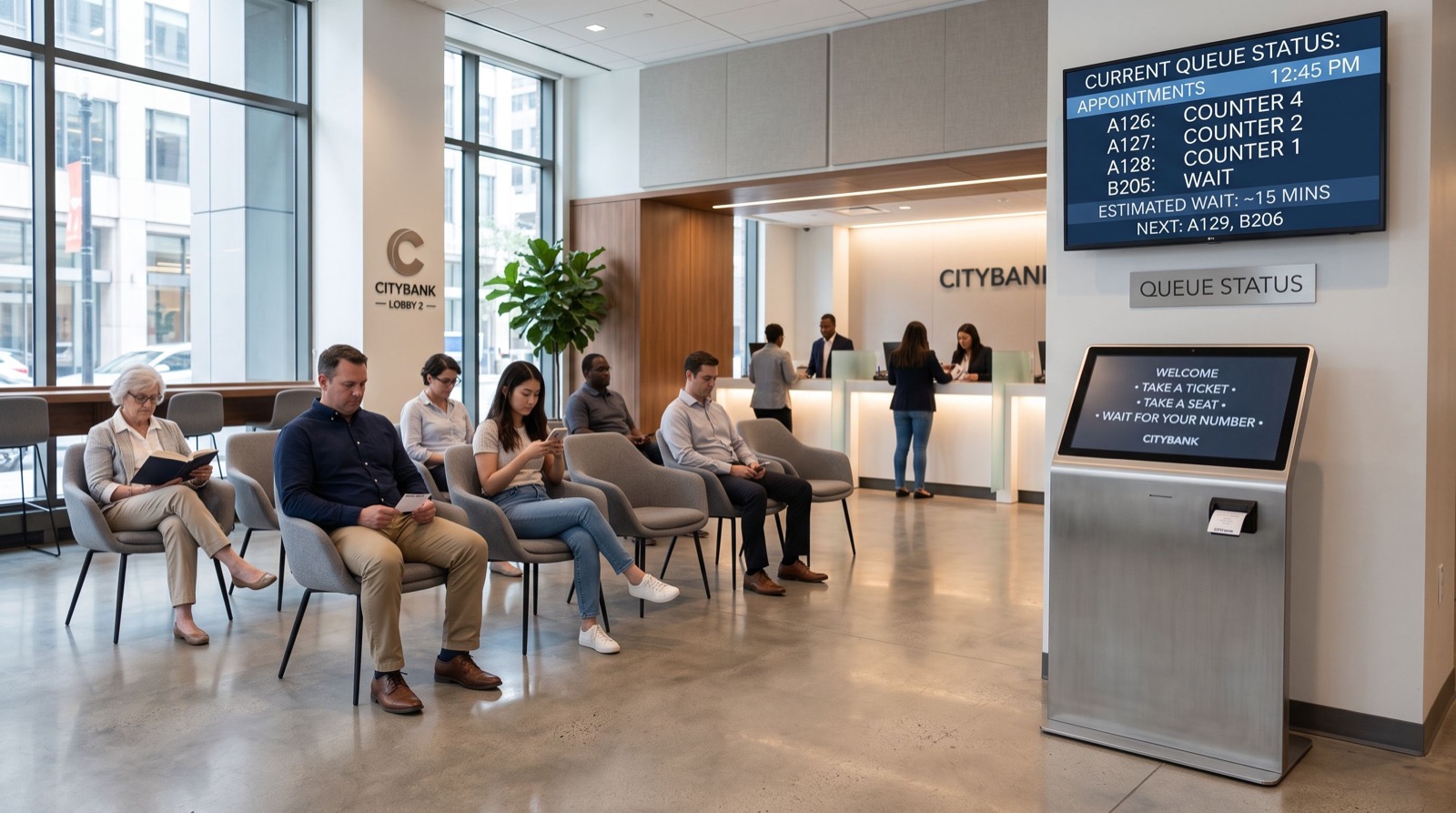
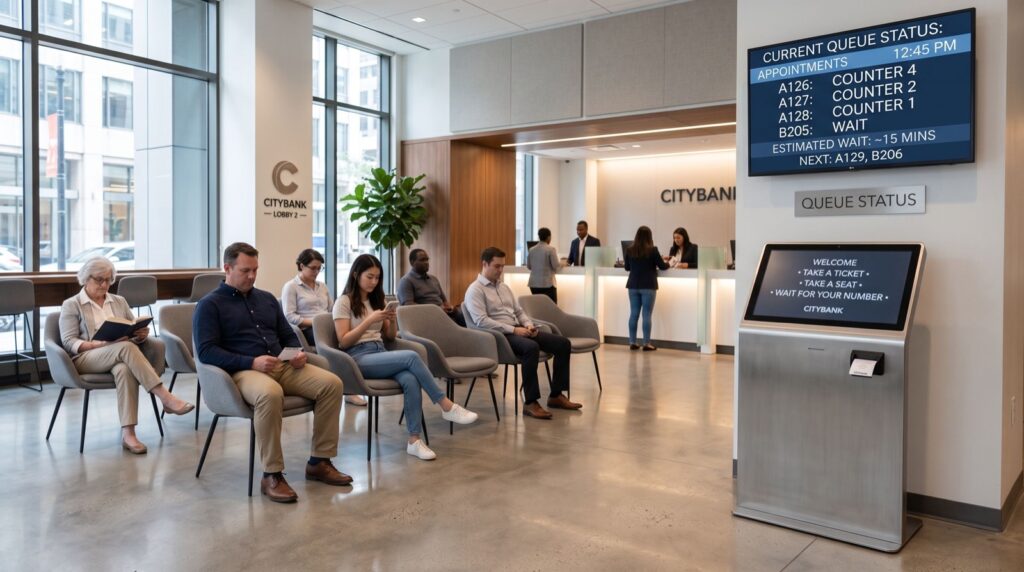
At its core, a queue management system replaces the chaotic “stand and wait” model with a structured flow. Customers take a digital ticket, receive a predicted wait time, and get called to the right counter by a display or SMS. Behind the scenes, managers see live dashboards showing load, service speed, and bottlenecks.
From our own deployments across service counters, three outcomes repeat almost every time: visible waits shrink, perceived waits shrink even faster, and staff stress drops because the “who’s next” argument disappears.
The core building blocks
- Ticketing: kiosk, QR code, or mobile check-in.
- Routing logic: rules that send each customer to the best-skilled agent.
- Digital signage: screens that call tickets and reduce confusion.
- Notifications: SMS or app alerts so people can wait comfortably.
- Analytics: reports on wait time, service time, and no-shows.
Why Queue Management Matters More in Saudi Arabia in 2026
Saudi Arabia’s service economy is expanding fast, and footfall in malls, hospitals, and government one-stop shops keeps climbing. The Kingdom’s official reform program, detailed on the Vision 2030 portal, places customer experience and digital transformation at the center of national goals. A smart queue platform is a direct, low-cost contribution to those targets.
There is also a well-documented psychology at play. Research summarized by Harvard Business Review shows that occupied, informed waiting feels far shorter than uncertain waiting. Giving customers a clear number and an honest estimate changes how the wait feels, even before you shorten it.
Industries seeing the biggest gains
- Banking: routing premium clients and routine transactions separately.
- Healthcare: appointment-plus-walk-in blending without chaos.
- Government services: transparent, fair, first-come order.
- Retail and telecom: turning idle wait time into browsing time.
Comparing Queue Management Approaches
Not every business needs the same setup. The table below maps common options to typical use cases so you can shortlist quickly.
| Approach | Best for | Typical wait-time reduction | Setup effort |
|---|---|---|---|
| Simple ticket + display | Small clinics, single branch | 15–25% | Low |
| Virtual (SMS/app) queuing | Retail, telecom stores | 25–40% | Medium |
| Appointment + walk-in hybrid | Banks, hospitals | 30–45% | Medium |
| Enterprise multi-branch suite | Chains, government networks | 35–50% | High |
For organizations that also serve customers in vehicles, pairing an indoor queue platform with a Drive-Thru Solution in Saudi Arabia creates a single, unified view of flow both inside and outside the branch.
How to Choose the Right System
Buying well is mostly about matching features to your actual pain points. Use the checklist below before signing anything.
- Map your peak hours. Know when and where lines build up.
- Decide on self-service. Kiosk, QR, or mobile check-in.
- Prioritize analytics. If you cannot measure it, you cannot improve it.
- Check Arabic and English support. Bilingual signage and SMS are essential.
- Confirm integrations. CRM, appointment tools, and SMS gateways.
- Plan for scale. Can it grow from one branch to fifty?
When you reach the shortlist stage, working with experienced, queue management system in saudi arabia providers will save you from costly rework. The right partner installs, configures routing rules, and trains staff so the system actually gets used.
A practical tip from the field
Start with one high-traffic branch as a pilot. Measure the baseline for two weeks, deploy, then compare the same two-week window. This gives you a defensible before-and-after number you can take to leadership, and it exposes routing mistakes before you roll out everywhere.
Implementation: What the First 30 Days Look Like
Deployment is rarely the hard part. Adoption is. A realistic rollout runs in short phases so staff are never overwhelmed.
- Week 1: Install hardware, set service categories, baseline data.
- Week 2: Train staff, test routing, refine wait-time estimates.
- Week 3: Go live with SMS notifications and signage.
- Week 4: Review analytics, tune rules, document wins.
Across projects, the branches that assign one internal “queue champion” adopt fastest. That person owns the dashboard, flags issues, and keeps the configuration honest. Treat them like the dependable specialists they become for your operation, and the technology pays for itself quickly.
Measuring Return on Investment
ROI shows up in three places: reduced walkaways, higher throughput per staff hour, and better reviews. Even a conservative 20% cut in average wait time typically increases completed transactions during peak windows. Capture those numbers monthly, because they justify expansion to additional sites.
Pair the hard metrics with soft ones. Short post-visit surveys delivered by SMS reveal whether the perceived experience improved, not just the clock time. Both matter, and both move together once a queue management system is tuned.
Frequently Asked Questions
How much does a queue management system in Saudi Arabia cost?
Entry-level single-branch setups start modestly and scale with features. Virtual queuing, multi-branch dashboards, and CRM integration raise the price. Most buyers recover the cost within months through higher throughput and fewer abandoned visits.
Can it handle both Arabic and English?
Yes. A good system offers fully bilingual kiosks, signage, and SMS messages, which is essential for the Kingdom’s diverse customer base and a must-have on any requirements list.
Does it work for walk-ins and appointments together?
It does. Hybrid modes blend scheduled appointments with walk-in tickets on one fair timeline, so neither group feels ignored and staff stay balanced.
How long does deployment take?
A single branch can go live in days. Multi-branch enterprise rollouts take a few weeks per phase, mostly for training, routing design, and integration testing.
Conclusion
A well-chosen queue management system in Saudi Arabia is no longer a luxury; it is a practical lever for shorter waits, happier customers, and calmer staff. Start with a focused pilot, measure honestly, and scale what works. In 2026, the organizations that treat waiting as a design problem, not an afterthought, will win the loyalty race. Ready to shorten your lines? Talk to a specialist team today and map your first pilot branch.