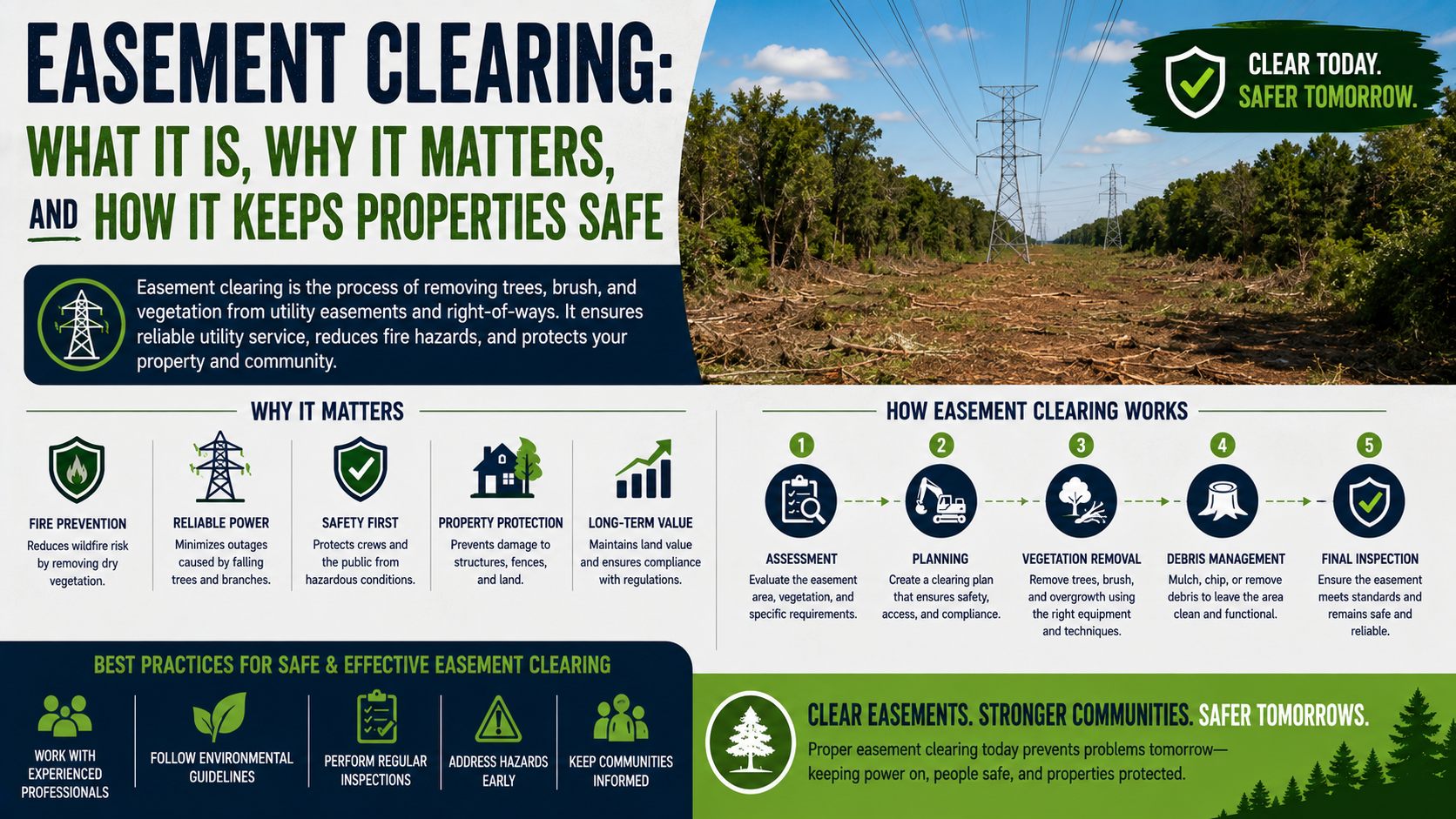
Easements are one of the most misunderstood parts of property ownership. They sit quietly on deeds, often forgotten for years, until overgrown vegetation, fallen trees, or thick brush start causing trouble. That’s when easement clearing becomes essential. Whether the easement supports a power line, gas pipeline, drainage path, or shared roadway, keeping it clear protects infrastructure, prevents safety hazards, and helps property owners avoid unexpected liability.
This guide walks through what Easement Clearing Detroit actually is, why it matters, who is responsible, and what the process typically looks like, written for anyone who owns property, manages land, or works with shared rights-of-way.
What Is an Easement?
An easement is a legal arrangement that gives someone, usually a utility company, municipality, or neighboring property owner, the right to use a portion of another person’s land for a specific purpose. The land itself still belongs to the original owner, but the easement holder has the right to access it. Common examples include utility lines, water and sewer pipes, drainage swales, shared driveways, and access roads.
Easements are recorded on the property deed and remain in place even when the property is sold. They are an established part of how communities deliver power, gas, water, internet service, and other essentials.
What Is Easement Clearing?
Easement clearing is the process of removing trees, brush, overgrowth, fallen limbs, debris, and other obstructions from within an easement so that the area remains accessible and usable for its intended purpose. The goal isn’t to strip the land bare; it’s to maintain a clear, safe corridor that allows utility workers, maintenance crews, and emergency responders to do their jobs.
Depending on the easement type, clearing may involve trimming branches, removing entire trees, grinding stumps, mulching brush, or hauling away accumulated debris. The exact scope depends on the agreement attached to the easement and the type of infrastructure being protected.
Why Easement Clearing Matters
Letting vegetation overtake an easement may not seem like a major issue, but the consequences can build up quickly. Here’s why regular clearing is so important.
Safety. Overgrown easements obscure visibility, create fire hazards near power lines, and can lead to serious injuries when access points become difficult to navigate. Roots can damage underground pipes, and falling limbs can take down power lines during storms.
Reliable utility service. Power outages, broken water mains, gas leaks, and telecommunications failures are far more disruptive when crews can’t access the lines quickly. Clear easements allow rapid response and shorter repair times.
Regulatory compliance. Municipalities and utility companies often require easements to remain clear. Failing to comply can result in citations, code violations, or even forced clearing at the property owner’s expense.
Property protection. Tree roots and unmanaged vegetation can cause real damage to buried infrastructure. Clearing prevents costly repairs and reduces the risk of secondary problems like sinkholes, drainage issues, and erosion.
Liability reduction. When easements are properly maintained, the property owner reduces the risk of being held responsible for accidents, service interruptions, or environmental issues.
Who Is Responsible for Easement Clearing?
Responsibility depends on the type of easement and the agreement that created it. In many cases, the utility company maintains the easement to ensure their infrastructure functions properly. In other cases, the landowner is required to keep the area clear. Some easements split responsibility, where the utility handles major trimming around lines while the owner manages general brush and debris.
The best way to know who is responsible is to review the easement documentation attached to the property deed or to contact the utility provider directly. Either way, it’s wise for property owners to stay aware of easement conditions, since unaddressed issues can quickly become their problem.
Common Types of Easements That Require Clearing
Utility easements. These cover power lines, communication cables, gas pipelines, and water or sewer lines. Vegetation must be controlled to prevent contact with overhead wires and to allow access to underground systems.
Drainage easements. These exist to ensure proper water flow across multiple properties. Obstructions in drainage easements can cause flooding, erosion, and standing water that damages nearby structures.
Right-of-way easements. These provide access along roads, paths, and corridors. They’re common around highways, rail lines, and shared driveways.
Conservation easements. These have more specific clearing requirements aimed at preserving natural habitats while still maintaining access for monitoring and maintenance.
How the Easement Clearing Process Typically Works
A professional easement clearing project usually starts with a site survey. The crew identifies the boundaries, takes note of trees, shrubs, debris, and any sensitive features such as utility markers or environmental areas. From there, a clearing plan is created that takes into account local regulations, the type of easement, and the long-term maintenance needs.
Once work begins, equipment such as forestry mulchers, brush cutters, chain saws, stump grinders, and chippers is used to clear vegetation efficiently. Mulching equipment is especially popular today because it grinds vegetation in place, reducing waste and stabilizing the soil at the same time. Heavy debris and large logs are hauled off the site as needed.
After the main clearing is complete, the area is cleaned up and, in many cases, treated with erosion control or seeded with ground cover to prevent regrowth of invasive species.
Common Questions About Easement Clearing
Can I build on an easement? Usually not. Permanent structures, fences across utility lines, sheds, and pools are typically prohibited because they would block required access.
How often should easements be cleared? Most easements benefit from periodic maintenance. Frequency depends on local growing conditions, the type of vegetation, and the type of infrastructure being protected.
Will clearing damage the property? Professional crews use careful methods designed to protect surrounding land while removing only what’s required by the easement. Restoration steps, like reseeding, are often included to prevent erosion.
What happens if I refuse to allow access? The utility company or municipality may have legal rights to enter the easement to perform maintenance, especially in emergencies. Refusing access can lead to legal consequences.
Why Detroit Properties Need Easement Clearing
Detroit and the surrounding region have a wide network of utility lines, drainage corridors, and shared access paths. With Michigan’s long growing seasons and the area’s mix of urban, suburban, and rural environments, vegetation can quickly overtake easements if not maintained. Professional Easement Clearing Detroit services help property owners stay compliant, protect utility infrastructure, and prevent the kinds of issues that lead to costly problems down the road.
Final Thoughts
Easement clearing is one of those tasks that quietly protects entire communities. It keeps the power on, the water flowing, the gas lines safe, and the roads accessible. For property owners, it also protects long-term value by preventing damage to underground systems and reducing legal exposure.
Whether you own a home with a utility line crossing the backyard or a commercial property with multiple easements running through it, understanding the role of easement clearing helps you stay ahead of issues. Regular maintenance keeps everything running smoothly and avoids surprises when the next storm rolls in or the next utility upgrade arrives.
Easements may be invisible most of the time, but the work that maintains them is what keeps modern infrastructure functioning. Treating them with the attention they deserve is simply good property stewardship.