Ask an engineer to design one rooftop system for Sialkot and another for Karachi and you will receive two noticeably different drawings. Solar installation in Sialkot must survive dense winter fog, hailstorms, and some of the highest lightning activity in Punjab, while a Karachi system fights salt-laden coastal air that corrodes cheap hardware within a couple of monsoons. Geography quietly rewrites the rulebook for panel tilt, structure material, inverter placement, and even the cleaning schedule.
Understanding these regional differences before you sign a contract helps you demand the right specifications instead of accepting a copy-paste design. Here is how the two cities compare in 2026, and what each one demands from a properly engineered system.
Why Location Rewrites the Rules for Solar in Pakistan
Pakistan enjoys some of the best sunlight on the planet, but “good sunlight” is an average that hides enormous local variation. Irradiance maps published through the World Bank’s Global Solar Atlas show meaningful differences in yearly yield between northern Punjab and the Sindh coast, and those numbers shift further once you account for fog days, smog season, humidity, and ambient temperature.
Climate also dictates hardware lifespan. A mounting structure that lasts 25 years in a dry inland city can rust visibly within three years near the sea. Designers who ignore this reality hand their customers a slow-motion failure.
Solar Installation in Sialkot: What the Punjab Climate Demands
Sialkot sits in a high-rainfall belt of northern Punjab, and its winters bring the fog and smog blanket familiar to anyone who has driven the GT Road in December. From roughly late November through January, daily generation can fall 30 to 45 percent below summer output. A smart design compensates rather than ignores this.
Design priorities for Sialkot rooftops
- Slightly oversize the array, typically 10 to 15 percent, so winter production still covers essential loads.
- Use a steeper tilt around 30 degrees to boost low-sun winter capture and help rain rinse off smog film.
- Install robust lightning protection and quality surge protection devices, since the region records frequent strikes.
- Specify hail-rated tempered glass modules, because spring hailstorms are a genuine local risk.
Firms experienced with solar installation in Sialkot already build these allowances into their proposals, which is exactly the kind of local knowledge worth paying for. Vetting matters here just as it does in real estate, where seasoned investors rely on quality service providers before committing to any housing project.
How Is Going Solar Different in Karachi?
Karachi flips the problem set. Fog is rare and winter yield stays strong, but the coastal environment is brutally corrosive. Salt spray attacks painted iron structures, cheap connectors, and unsealed junction boxes. Humidity accelerates potential induced degradation in lower-grade modules, and the summer heat pushes inverters toward thermal derating if they are mounted in direct sun.
Anyone comparing suppliers of solar panels in Karachi should insist on anodized aluminum or hot-dip galvanized structures, marine-grade fasteners, and IP65-rated enclosures as the baseline, not as premium upgrades. K-Electric’s net metering process also differs procedurally from Punjab DISCOs, so an installer familiar with KE paperwork saves weeks of delay.
Dust, heat, and the cleaning calendar
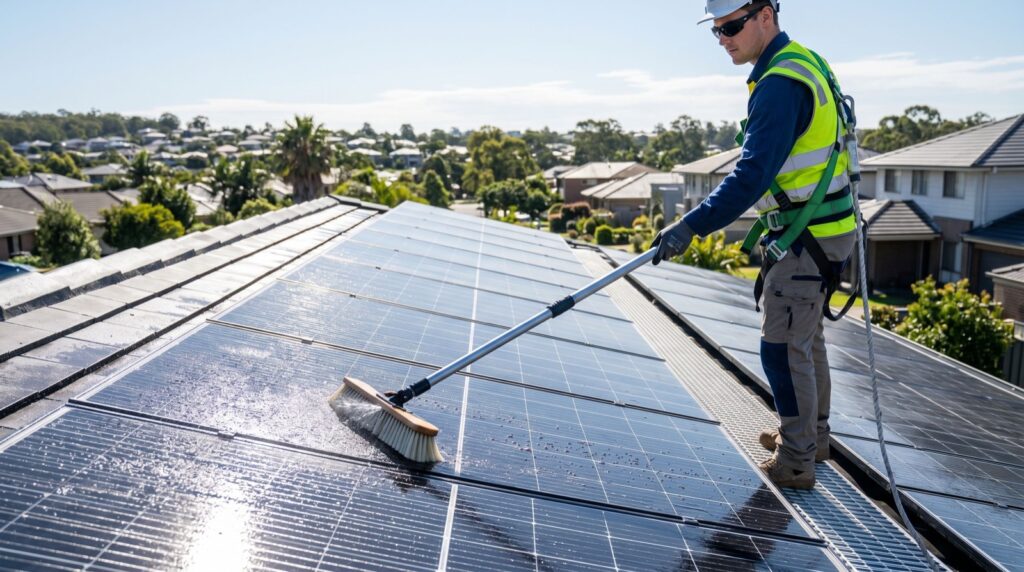
Karachi’s dust load means panels benefit from cleaning every two to three weeks in dry months. In Sialkot, monsoon rain does part of that work in summer, but smog film in winter still calls for a monthly wipe-down. Budget for this maintenance from day one, because a neglected array can quietly shed 8 to 12 percent of its expected annual output. Many installers now bundle quarterly cleaning contracts, and in either city that small recurring fee usually returns several times its cost in recovered generation.
Sialkot vs Karachi: Design Choices Side by Side
| Design Factor | Sialkot | Karachi |
|---|---|---|
| Main climate threat | Winter fog, hail, lightning | Salt corrosion, heat, dust |
| Recommended tilt | Around 28 to 32 degrees | Around 22 to 25 degrees |
| Structure material | Galvanized steel acceptable | Anodized aluminum preferred |
| Winter output dip | Significant, plan 30 to 45 percent | Mild, roughly 10 to 15 percent |
| Utility for net metering | GEPCO | K-Electric |
| Cleaning frequency | Monthly, more in smog season | Every 2 to 3 weeks in dry months |
Roof Preparation Steps That Apply in Both Cities
Whatever your address, the groundwork is identical. Complete these steps before any hardware arrives:
- Conduct a shading survey across the full day, noting water tanks, parapet walls, and neighboring buildings.
- Verify the roof slab can carry the structure load, especially on older constructions.
- Waterproof and seal all anchor points properly to prevent monsoon seepage into rooms below.
- Plan cable routes and inverter placement in shade, with ventilation and easy access for service.
- File the net metering application early, since utility approval often takes longer than the physical installation itself.
Frequently Asked Questions
Does Sialkot’s fog make solar a bad investment?
No. Annualized yield in Sialkot remains strong because eight to nine months of the year produce excellent output. Sensible oversizing and net metering credits carried from sunny months comfortably absorb the winter dip.
How long do standard structures survive in Karachi’s sea air?
Painted mild-steel structures can show serious rust within two to four years near the coast. Hot-dip galvanized steel or anodized aluminum extends structural life past two decades, which is why the upgrade pays for itself.
Are panel prices different between the two cities in 2026?
Module prices are broadly national since stock moves through the same import channels, but logistics, structure specifications, and labor rates create modest differences in total installed cost between cities.
Which city gets faster net metering approval?
Timelines vary by application quality more than by city. Complete files with correct single-line diagrams typically clear in four to ten weeks with either GEPCO or K-Electric, while incomplete submissions stall indefinitely.
Conclusion
The physics of sunlight is universal, but durable system design is intensely local. Match your tilt, materials, and maintenance plan to your city’s climate and your panels will deliver for decades. Whether you need solar installation in Sialkot engineered for fog and hail, or a corrosion-proof array by the Karachi coast, start with a site survey from a team that designs for your weather, not for a brochure. Book that survey this month and put 2026’s high tariffs to work for you instead of against you.